

Henry-James Gay moved to Duchy Home Farm in 2021, taking on the tenancy of this 400ha organic farm alongside a herd of Ayrshire dairy cows. It’s been a steep learning curve to understand the breed, the farm and it’s soils, a challenge he has relished alongside a great team.
Henry-James firmly believes that in order to do your best for wildlife on any farm, you first need a profitable and sustainable farming business. To achieve this he has focused on cow health and soil health, making best use of muck and slurry to build organic matter and produce the best quality forages for his 230 milking cows and their followers.
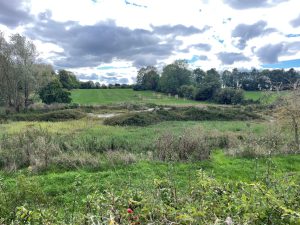
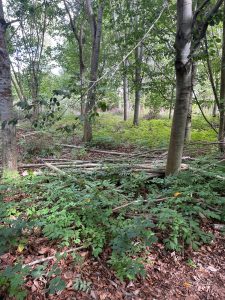
On our visit to the farm in September 2026 to celebrate their success in winning the long-standing Silver Pintail Award, we were shown the many habitats that have been both created and maintained alongside a very passionate landlord. On a steep bank, brambles and scrub have been allowed to grow up in a patchwork amongst established trees to prove habitat and food for birds. Bee hives can be found on the edges of fields, making the most of flowering species of crops, and hazel coppicing encouraging light onto the woodland floor allowing a variety of flora to flourish.
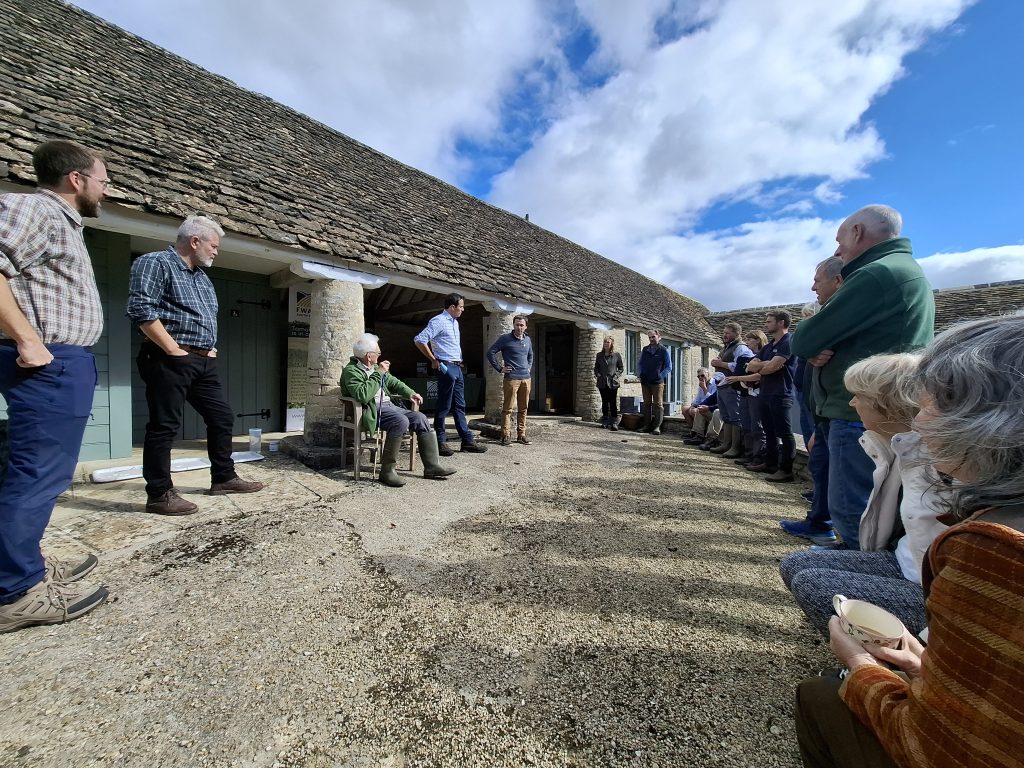
Our host Henry-James Gay welcoming guests and introducing the farm.
Efficiency was a word used several times by Henry-James. As one of seven Duchy of Cornwall Focus Farms, they are collecting data and trialling new ways of working to reduce their environmental impact. Energy efficient lighting in the buildings, solar panels to power the parlour and reducing fuel consumption are all proving beneficial.
Henry-James shares a passion for trees alongside His Majesty and this was evident on our visit with two newly created woodland areas and numerous in-field trees. These have the added benefit of providing shade and shelter for the livestock, something that was very welcome during this hot summer.
Whilst Tb has been a challenge, losing over 200 cattle to the disease since he took on the farm, he is still pushing forwards to increase the herd size. In addition there are plans to increase beef numbers on off lying land, believing this is the best way to improve soils. He’s looking forward to honing his regenerative grazing skills and seeing the results.
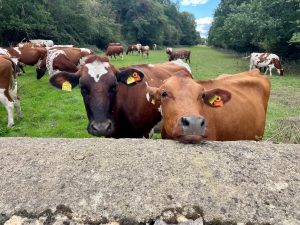
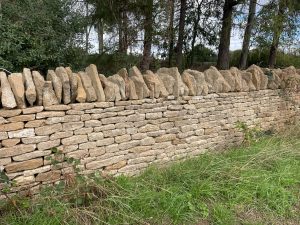
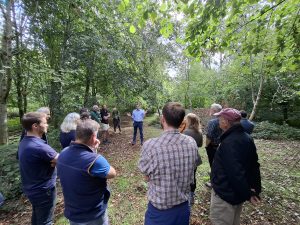
The corridors of hedges across the farm had caught the judges eyes, purposely cut incrementally to allow varying heights and habitats and the berries were abundant. Bird monitoring is happening on the farm but Henry-James is keen to get to know what else thrives, especially bat species and dormice, to help guide future habitat management.
As an organic farm they look to alternative ways to tackle pests and diseases. No wormer has been used in the cows for two years and they have had success using parasitic wasps to control flies. It is also hoped that the walnut trees planted in grazing fields will act as natural fly repellents.
Future plans include offering more educational access (they already host the Gloucestershire Kingfisher Award field days), trialing wood vinegar as a natural pesticide, finishing work on a large pond beside the farm drive and exploring the option of growing hazelnuts.
To find out more about the farm you can visit their website or follow them on social media.