
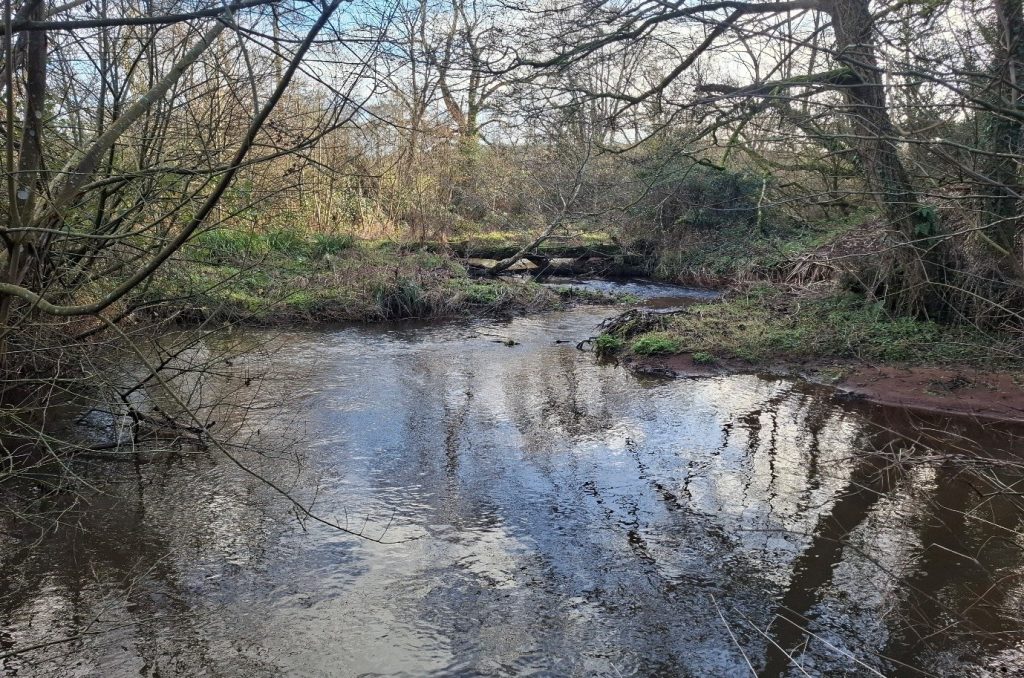
Leaky dams were installed in 2017 during the early days of the Hills to Levels project. We pushed the boundaries by placing them on a wider watercourse than we had previously attempted. After monitoring their performance, we carried out remedial work the following year, strengthening the structures and improving their function. Willow whips were planted around the dams and along the banks to stabilise both the dams and the channel.
Nearly eight years later, we were pleased to find the main structure still intact and working effectively. Although continued monitoring is needed, it appears in good condition with many years of life left. The willow and other planting have established well, contributing to bank stability and enriching the riparian habitat. While no formal watercourse surveys were completed in the early days, the stream now shows a greater variety of physical features, suggesting a more diverse watercourse.
With FWAG advisers now trained in River Condition Assessment, we can begin to measure the effects of natural flood management features more quantitatively, helping us better understand and demonstrate the success of work like this.

A photo taken in 2018 shortly after the initial work was completed.

A photo taken in 2026 – 8 years after the work was completed.
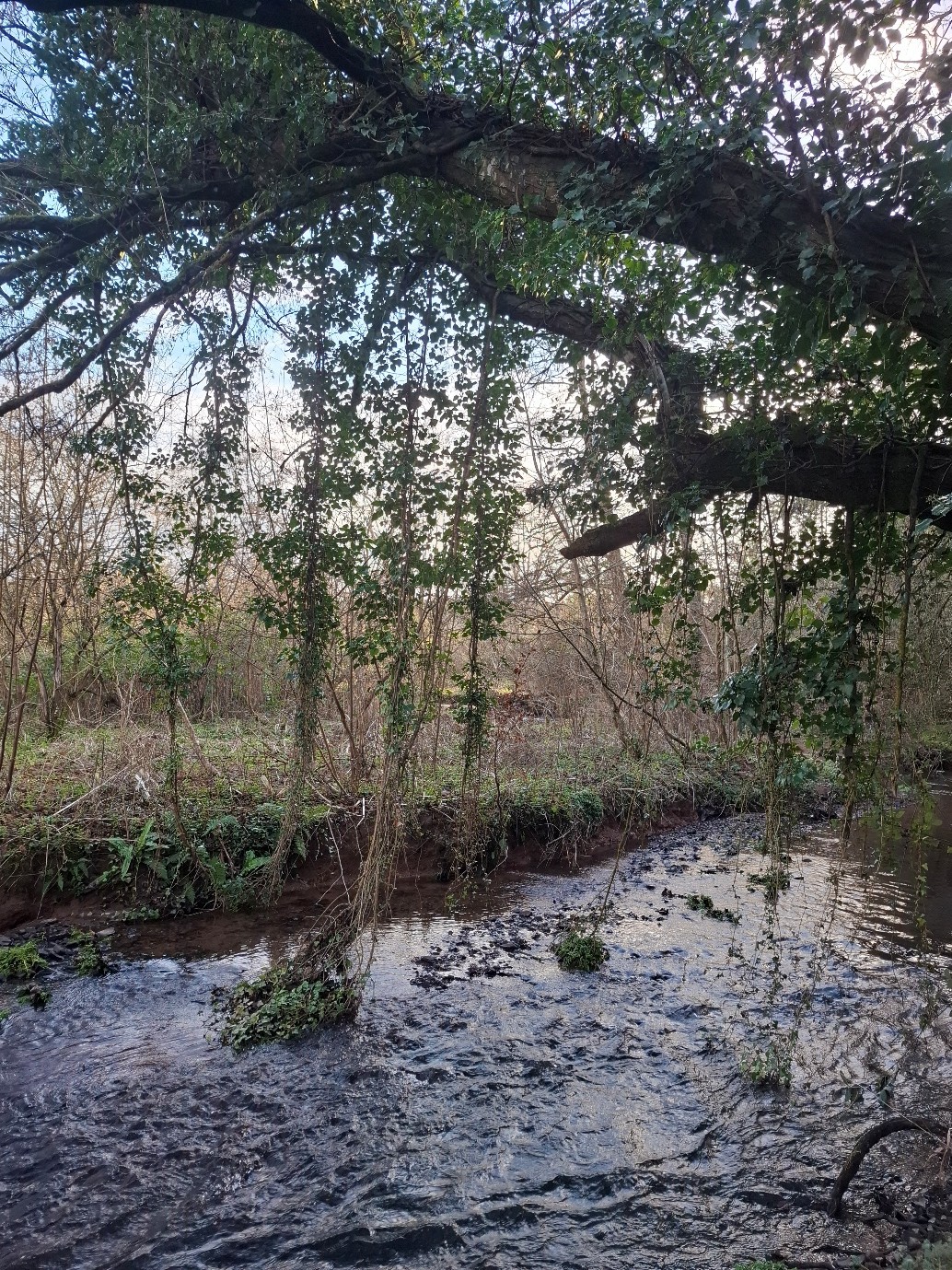
Channel features including diversity of flow and in-channel vegetation.
Case study by Joanna Uglow, Senior Farm Environment Adviser, Somerset Team