
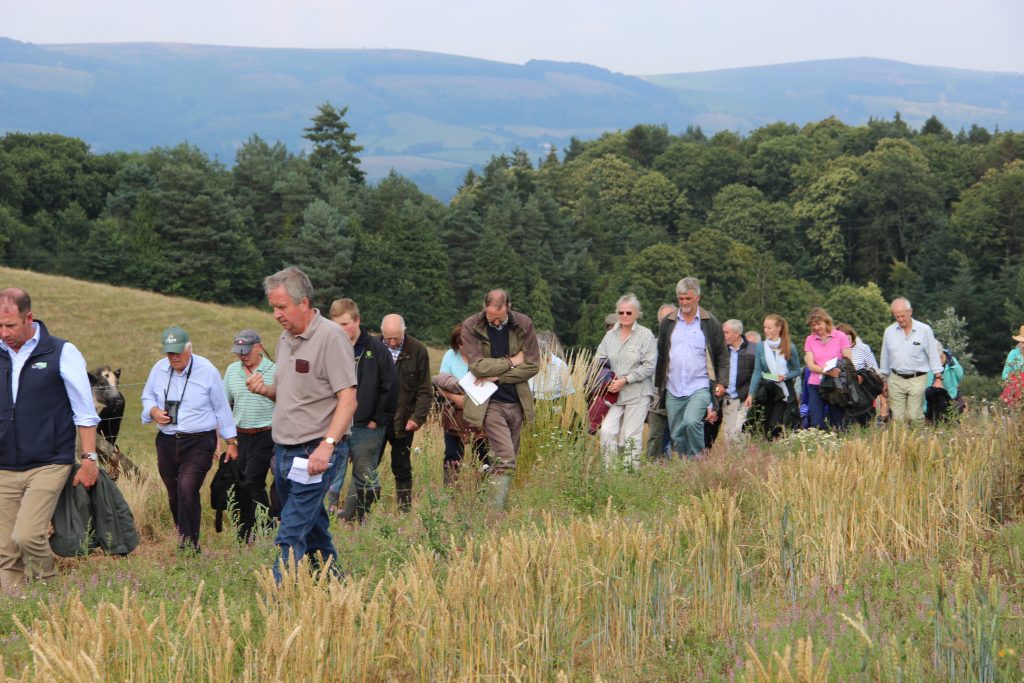
Integrated Local delivery
Integrated Local Delivery (ILD) is a proven approach for farmers and communities to tackle climate change by working with partnerships at a local level.
This film introduces the Integrated Local Delivery framework and the key role of the facilitator, who brings all the local stakeholders together to scope risks and opportunities at a landscape level.
The framework gives the facilitator the tools they need to connect locally, relevant government, charitable, corporate and environmental organisations to work together in support.
Watch this show video to find out what Integrated Local Delivery is and how it could work in your community.
How does the Integrated Local Delivery Framework work?
Integrated Local Delivery requires a trained and enthusiastic facilitator to bring together and value all stakeholders within a local area, to scope risks and opportunities at a landscape scale. This approach inspires and enables communities to tackle the causes of climate change in their local environment.
The framework gives the facilitator the tools they need to connect locally relevant government, charitable, corporate and environmental organisations to work together in support, to help find funding and resources from many locally relevant sources.
The Integrated Local Delivery framework …
- Looks to work within the lowest appropriate national administrative structure (i.e. parish, ward or town), valuing local and farming knowledge, culture, and sense of place of the people that live there.
- Clarifies which statutory and non-statutory partners have an interest in the area so that they can be involved, and their strategic aims and objectives can be identified and delivered within that administrative area.
- Seeks to deliver a wide range of strategic objectives within the defined area to maximise the wider landscape scale potential and maximise effective use of public, private and charitable funds.
- Seeks to strongly support and value the role and knowledge of the farming and local community, valuing and enabling local action and releasing local resources.
- Connects groups of communities to farmer groups working throughout river catchments to help manage the essential resources of water to build resilience for food supplies, healthy soil, habitat management, biodiversity recovery, natural flood management and carbon capture.
- Promotes the essential role of facilitation through an independent third party (specialist adviser)to develop or support a local group that acts as the collective discussion forum for the area, with clear lines of communication to those public agencies with legal responsibilities.
- Incorporates the Parish Council(or other local government framework) into the communication structure of the local group to ensure continuity beyond project timescales.
- Provides a forum for all those within the defined area to act and offer knowledge and resources to achieve multi objective delivery with an inclusive list of partners.
- Identifies multiple funding opportunities and match funding through joined up partnership working.
- Enables people to understand how to take meaningful action, and in so doing improves social cohesion, health and wellbeing
Further information:
- Rural facilitator training. https://ruralink.co.uk/rural-facilitator
Listen to these podcasts, featuring Jenny Phelps MBE – Senior Farm Environment Adviser at FWAG SW who developed the ILD framework
- Building Landscape Scale Resilience – a podcast recorded at Groundswell 2026
- Landscape Approaches with Jenny Phelps – Farming Together For Bigger, Better Outcomes
- Farmers and Facilitators: How you can tackle the climate crisis on a local level
- Giving communities the power to shape their landscapes
Further reading
- A community guide to your water environment – A guide to help your community manage water locally
- Overview of the Water and Integrated Local Delivery (WILD) Project Phase 1: 1st April 2013 – 31st March 2016
- Evaluation report for the Integrated Advice Project 2022-23
Jenny Phelps speaking at Groundswell in 2021 – Environmental Land Management Scheme – The Catalyst ?