
Author: Bea Oliver.
Summary
- In May, farmer Henry-James Gay welcomed four school groups to his farm near Tetbury to learn about nutrient cycles on his dairy farm, Duchy Home Farm.
- FWAG staff, along with Farm Carbon Toolkit and volunteers, delivered two field days of on-farm educational activities to 126 children from four local schools, across two days in May. The children were split into groups and visited three stations to learn about ‘Nutrient cycles’. The stations were: calves & cows (dairy cow lifecycles, nutrition for calf, cow and human); soil health (arable vs buffer structure, soil nutrients and invertebrate habitat); and decay (what are decomposers and decomposition? How do they fit in the nutrient cycle?).
- The classes went away to embed their learning in projects of their choosing, ready to present at the celebration day.
- In July children, parents, siblings and teachers from the schools gathered to present their projects and show off their learning. The children mounted their displays and gave performances, ate sausage rolls and cake. Volunteers offered engaging activities, including butterfly habitat creation, fossil handling, clay animal art, and making fresh butter from the farm’s organic cream. Three judges then chose a winner and runner-up and prizes were awarded, including vouchers and books for all participating schools
- The 2025 scheme was funded by Farming in Protected Landscapes, Duchy of Cornwall, Gloucestershire Agricultural House Foundation, Renishaw and George Veterinary Group.
Achievements
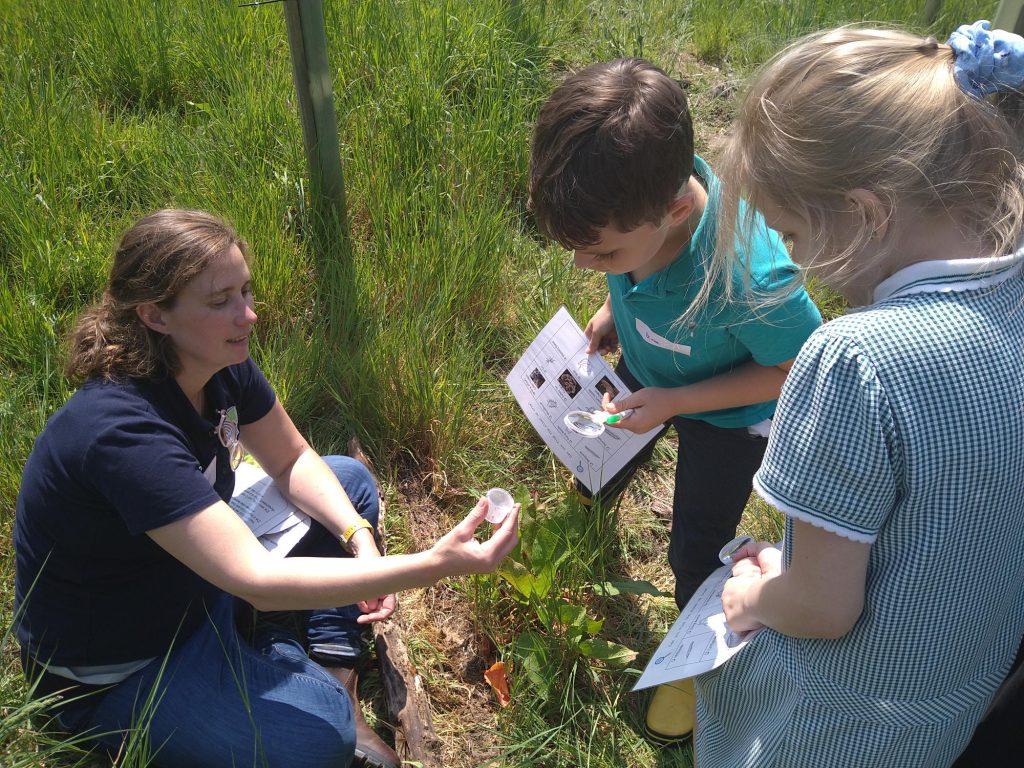
- A highlight for the children and volunteers was the Decay activity, based in the farm’s wildlife area. They learned about detritivores and fungi, used hand lenses to look up close at the rotting logs of the hibernacula, and enjoyed a scavenger hunt that include a dryad’s saddle fungus and an abundance of invertebrates that help to return nutrients to the soil.
- The children discussed structure and nutrients of soils androots whilst they dug around in the Soils activity. For some it was the first time they had been encouraged to touch and smell soil. They learnt how soil nutrients are linked to cattle health via feed and manure, and saw first hand the difference in root structure and invertebrate life between arable and buffer soils.
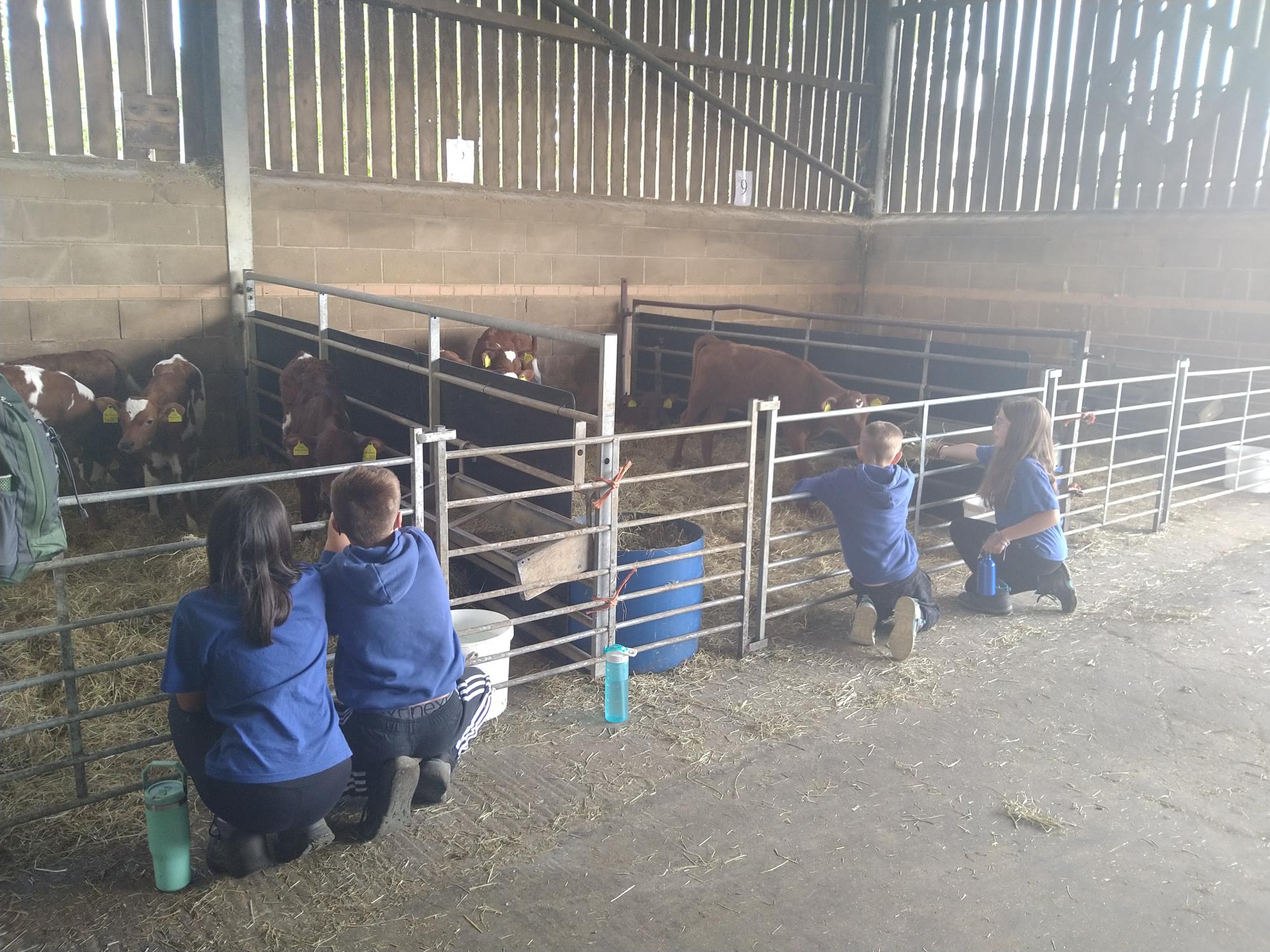
- The dairy farm operates a year-round calving system, so the children fed silage to calves as they learned about calves of different ages, their differing needs, the nutrition and milking of the cows, and the interplay with soil nutrients via manure, grassland and arable crops.
- The schools went on to create wonderful research projects into nutrient cycles and decay, which they presented at a special presentation picnic in July. Their displays and songs were enjoyed by their families and judges from Duchy of Cornwall and Cotswold National Landscape, and farmer Henry.
- At the presentation picnic, children and their families were treated to hand-on activities from Butterfly Conservation, a local fossils expert from Cotswold National Landscape, and butter-making and clay creatures activities, along with free sausage rolls and cakes from Hobbs House bakery, and free glass of organic milk from Duchy Home Farm’s Ayrshire herd, supplied by Waitrose.
- The winning school this year was Kemble Primary school. The judges were impressed by their invitation to ask questions – and their ability to answer them – about fungi, decay and soil nutrients. Well done to Mrs. Thorogood’s Year 4 class at Kemble!
Feedback
The feedback about the field days from the schools was excellent and the children so clearly found the sessions engaging:
“At Chesterton, we had such a lovely time. It was very intuitive. All of us (including the adults) learnt a lot about livestock and nature surrounding a farm. The group exercises were long enough to keep the children engaged without them starting to become bored. They were interactive and full of facts. Each of the guest speakers were knowledgeable and could answer every question the children threw at them. The children enjoyed their company and they were kind and respectful to each and every one of them.” Teacher, 2025.
I really liked going to see the calves, we learnt a lot about how they drink milk and how they sleep on sawdust and chew their food constantly.”
“I never knew how much nutrients was in soil and how many things you could find in a piece of soil from the ground.”
“At the first assignment, I learnt that all bugs have special purposes in their habitat.”
“I really enjoyed feeding the cows, they came up to us and licked our hands.”
“I loved the nature area when we were searching for the bugs. There were some bugs that I never knew could be found in such a small space.”
“That was SO interesting!”
“They were engaged the whole time“ Kate, volunteer.
The field visits were hosted by Broadfield Farm, part of Duchy Home Farm. Farmer Henry and his staff were clearly delighted to share their work and world with such enthusiastic participants and took time to show the children extra curiosities and explain how various systems worked. Following the visits, Henry said:
‘My favourite memories of the visit were seeing the smiles on the children’s faces as they saw the baby calves or found an insect under a log and them rushing to tell their friends what they saw as the groups past each other on their way to the next base station. My favourite comment was “that’s SO cool!””
How can you help?
To make these days accessible for all, we fundraise each year so that the Kingfisher field days are free for schools to take part in – including travel to and from the farm. This means that we rely on donations and grants to help us provide this amazing opportunity.
In 2026 we will return to Duchy Home farm with the exciting addition of soil slake tests and watching the milking!
If you think your foundation or business could help support this vital learning opportunity for children in Gloucestershire, please contact our KAS Coordinator Bea Oliver on 0748305179 / beatrix.oliver@fwagsw.org.uk or and take a look at our website.