
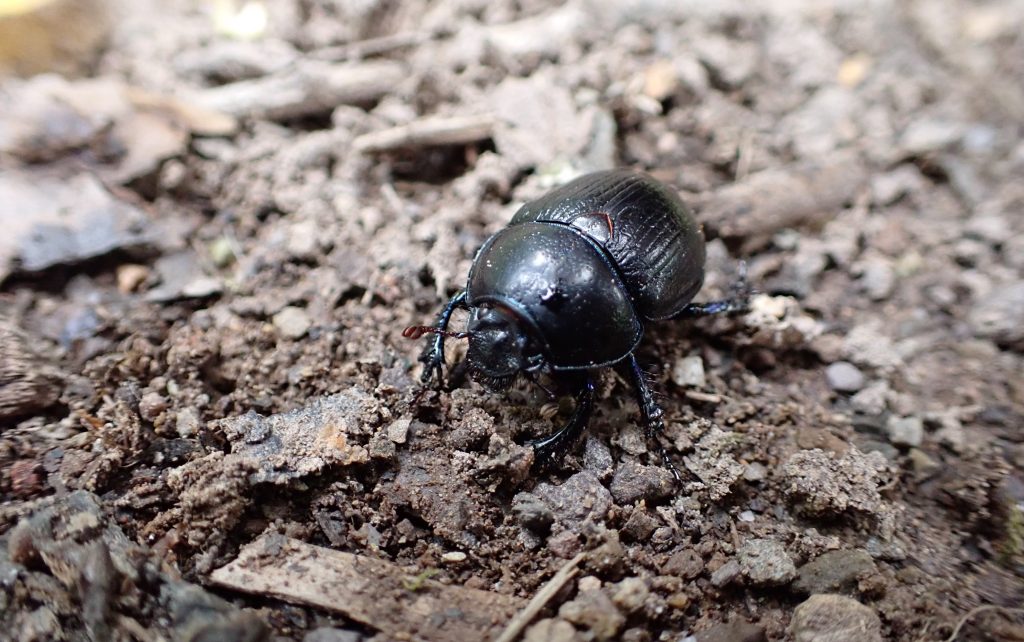
Groundswell 2025 demonstrated how knowledge shared at agricultural events can spark interconnected ideas and practical innovation. One such outcome was the development of the Living Fields Research Project, inspired by sessions exploring soil health, livestock roles, and the ecological risks posed by agrochemicals and livestock treatments. Talks by Sally-Ann Spence, Clive Turner, FWAG SW, and others highlighted the vulnerability of soil ecosystems—especially dung beetles—to persistent chemicals such as pesticides, anthelmintics, nitrogen, and phosphate. These substances undermine the soil food web essential for food security, biodiversity, water resilience and climate mitigation.
As farmers are increasingly encouraged to use regenerative livestock systems to restore habitats, concerns arise about maintaining animal welfare and productivity if conventional inputs are reduced or banned without sustainable alternatives. A key moment of inspiration came from a session on wood vinegar, a natural byproduct of wood carbonisation. Research presented by Tim Parton suggests it may function as a natural pesticide, antimicrobial agent and soil enhancer, potentially replacing conventional livestock treatments while supporting ecosystem recovery.
A Defra announcement within the ADOPT programme revealed £125 million for regenerative innovation, prompting the conception of the Living Fields Project, which will investigate wood vinegar’s impact on dung beetles, agrochemical reduction, rotational habitat management and effective application rates.