Author: Neve Bray.
Introduction
The Kingfisher Award Scheme (KAS) has been running in Dorset for three years. In 2024, it was hosted by the generous Tory family at Charisworth Farm. The Torys have beef cattle, arable crops and grassland.
The field days took place in May and consisted of three activities focussed on the theme ‘What Lives on a Farm?’
Outcomes
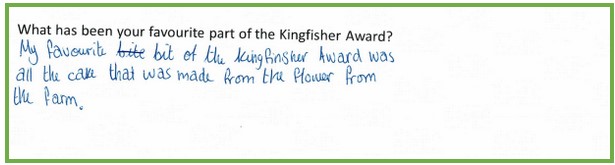
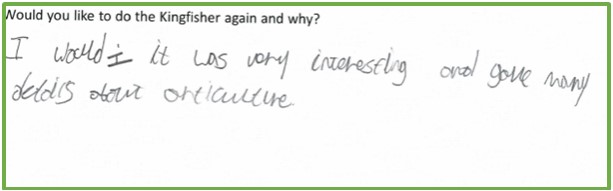
The main objective of the scheme is to educate and engage school children with nature, farming and food. This is achieved through carefully-designed practical activities suited to a key stage 2 (KS2) curriculum. This objective is measured by teacher, volunteer and student feedback and the evaluation confirmed that all activities delivered this year were very well received.
Although the activities were designed for children, the adults involved were also able to engage with one another and explore the themes in greater depth, particularly when they returned to school.
The scheme planned to engage the following number of participants in 2024:
Up to 120 primary school children from 4 schools.
A minimum of 25 volunteers across the four days
12 teaching staff
6 farmers/farm workers
In reality, 143 children from 6 different classes in 3 schools attended with 6 teaching staff and 28 volunteers, including farmers and farm staff assisting over the four days.
What went well
The key to the success of the establishment of the KAS in Dorset was the enthusiasm of the host farm, schools and volunteers.
Over the three field days, the children were engaged in activities surrounding this year’s theme What Lives on a Farm? Activities included cows and calves, farmland wildlife, birds and food chains. Each activity was led and supported by volunteers and included hands-on aspects across the three activities – there was something for everyone!
During the delivery of the project, the coordinator and farmer hosted pre-visit meetings held online with the schools. These short meetings allowed the coordinator to introduce themes to the children and invite questions to prepare for the farm visit. Post field day, the coordinator visited each school and built on the children’s learning. The visits worked incredibly well to reinforce the enthusiasm of the children for farming and nature. These visits included a review of the children’s projects so far, as well as a structured activity, including cow manure examinations, making poo and creating mini farm models. An initial online visit, reinforced with a post-field day interactive session is something that will be incorporated into future Kingfisher years.
The picnic presentation displayed the children’s engagement. Each display held its own merits and showed how enthusiastic the children were about the Kingfisher Award Scheme. While the judging process was taking place, the children were entertained with a variety of activities, which added to their knowledge of farming and nature, as well as engaging them in other curriculum areas such as sport, science, art and design. These activities expanded learning, not only for children participating but also for siblings and friends.
Lessons learned
We engaged 4 schools in the project however one school dropped out mid-way through planning.
We found that engagement with schools is better via letters and school meetings, rather than email. We offer places to any interested school in Dorset located near a foodbank or deprived area, not just within the targeted area. Regarding schools, we found that those in special measures or requiring improvement from OFSTED are less likely to respond due to external pressures and time. Emails to schools can get, so having initial contacts within schools is critical to building a relationship.
For those wanting to establish a similar project, the key is to get a host farm with the same enthusiasm as the coordinator!
Additional project benefits
FWAG SW staff attended the Teddy Rocks festival as volunteers to raise awareness of the Kingfisher Award Scheme, farming, wildlife and education. This led to 16 schools, in addition to those who were participating in the scheme, expressing an interest. These schools were based in Dorset, Hampshire and Wiltshire.
The host farmer has now got an established list of schools wanting to engage in Educational visits.