
Author – Charlotte Marshall.
Positioned between the iconic chalk streams of the Hampshire Avon and Poole Harbour’s Frome and Piddle, the Stour hasn’t always been considered a high priority catchment, the Cinderella Stream?
Although winterbournes and chalk streams feature amongst the tributaries, the River Allen, a chalk stream tributary of the Stour is home to breeding Atlantic Salmon.
The 48 tributaries of the Stour flow through a diverse geology which dictates the form of the rivers. From the chalk and greensand near Mere in Wiltshire, through the clays of the Blackmore Vale and a central belt of chalk through the Hillfort country around Child Okeford, it finally crosses into the sand formations around Christchurch, where it enters the Solent via Christchurch Harbour.
FWAG SouthWest advisers have been working in the Dorset Stour catchment for several years, most recently completing the 7-year Stour Headwaters Project, funded through the Water Environment Improvement Fund from the Environment Agency. Other partners working in the Stour include Wessex Water Catchment Management Team, Catchment Sensitive Farming (CSF), Wessex Rivers Trust and the Dorset Wildlife Trust.
One of the main issues to affect the Stour catchment is the impact of nutrients on its rivers. This is primarily from phosphorus, although nitrogen can also have an effect. Phosphorus causes eutrophication and is a particular problem for the streams and rivers in the catchment. Farming and water company discharges contribute to this loading of nutrients.
The Stour Headwater Project provided between £20k- £50k annually for work with the catchment’s farmers on everything from checking soil health, tree planting, trialling and establishing herbal leys and pond and wetland creation. The aims were to reduce the amount of sediment and nutrient lost into the watercourses, improve instream wildlife habitat and riparian habitat and slow the flow of water into the watercourses to reduce downstream flood risk.
Project Outcomes
Improving River Habitats
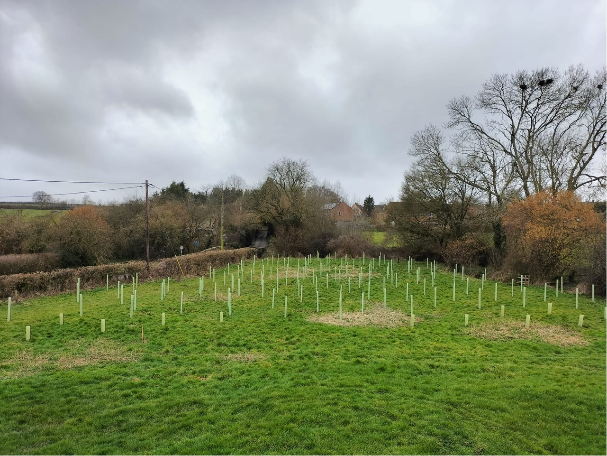
- Planting of trees along the riparian corridor and elsewhere on farms to limit sediment and nutrients entering watercourses after rainfall.
- Fencing of rivers to protect riverbanks and newly planted trees from damage by livestock.
- Reaches of river have been ‘daylighted’ by removing some overgrown vegetation to allow sunlight to reach the watercourse and improve instream habitats.
- Woody debris dams have been installed to slow the flow of water through catchments and reduce flooding issues.
- Wet habitats such as scrapes have been created on farms, and complex hydrological plans have been drawn up to remove a river from a large culvert and bring it up to the surface in a wet woodland corridor.
Supporting farmers to adopt practices that will reduce sediment and nutrient loss from soils
- Assessing farms and giving advice to landowners on how to improve their practice for water quality and supporting Countryside Stewardship (CS) applications to fund work.
- The project has supported the designing and building of new machinery which can reseed fields without ploughing soils. Events organised with local farmers demonstrated the machinery’s abilities and gained volunteers for trials. The equipment is being trialled on various farms and the results will compare soil health to normal practice.
- Events have also demonstrated the benefits of planting diverse swards and herbal leys: improvements to soil organic matter, water infiltration, animal nutrition, less need for nutrient inputs and reduced cultivation requirements, all of which will contribute to better water quality.
Supporting rural businesses
- Employing local contractors, suppliers and experts to assist with project delivery at a time when many businesses were challenged due to the pandemic.
Challenges we faced
- Lack of uptake – we had a good response from local farmers but not all were interested in taking up the offer.
- Lack of funding for infrastructure capital grants outside of CS.
Additional project benefits
- Engaged with a range of farmers across the catchment and made a positive difference to their farm business, yield and improved soil health.
- Produced nutrient management plans that help farmers make informed decisions about the correct usage and timings of manufactured and organic fertilisers.
What’s next
Continuous working partnership between Bristol Water, CSF and Bristol Avon Rivers Trust, future funding and increase in capital grant. Offering updated SFI and Countryside Stewardship advice to farmers who ask for it.
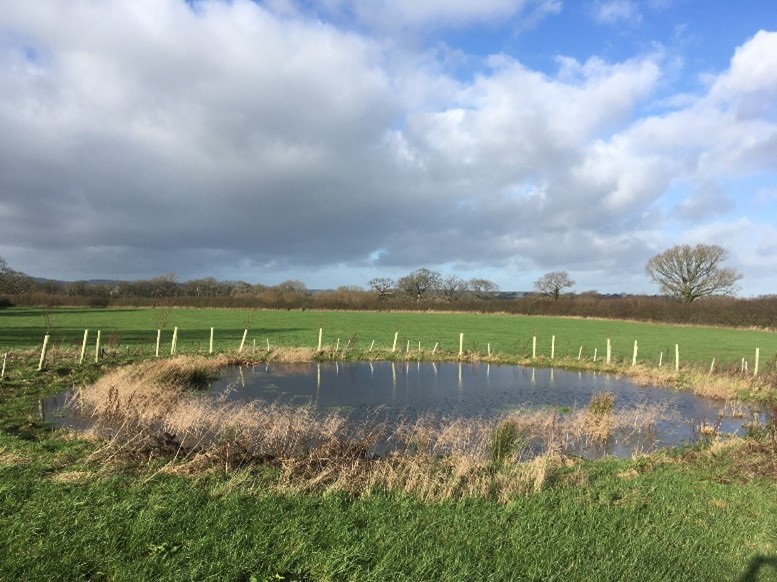
Restored Great Crested Newt Pond in the Lodden catchment.