

by Farm Environment Adviser, Anna Lantaff & Senior Farm Environment Adviser, Sammy Read.
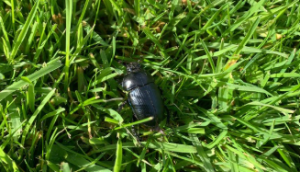 Dung Beetles are a type of beetle that rely on animal dung for food. With over 60 species of dung beetle in the UK alone, almost half of which are threatened species, these insects play a vital role in recycling nutrients from dung back into the soil, as well as reducing parasite burden in grasslands. Different species may occupy dung from different animals, at different times of year, and in different stages of decomposition.
Dung beetles are a positive indicator of good soil health and a healthy micro-habitat ecosystem. Some species, called dwellers, spend their life living within the dung pat, while others, called tunnellers, work by taking the dung down into the ground.
Both types offer many farm benefits, which include:
- Reduced fly pressure due to the phoretic mites they carry that eat fly larvae
- Fast breakdown of cow pats resulting in:
- greater grass availability
- reduction in habitat for pests like worm larvae
- reduced methane emissions from cowpats
- Improved soil structure through burrowing – some tunnelling beetles will burrow up to 1m deep, improving infiltration and aeration, alleviating compaction issues, and cycling nutrients
- Increased soil fauna activity as other species also feed on the dung
What can you do to help?
- Increase the fibre in livestock diet, which produces a more palatable dung pat
- Increase the diversity of livestock species / type, and graze throughout the year, which provides food and habitat for a longer period (so long as poaching and runoff are not an issue)
- Worm livestock in a way that protects dung beetles from damage by chemicals
Worming to protect Dung beetles – the PAT approach
Prevention
- Breed your own replacement stock – more likely to be resistant, less chance of importing new parasites
- Quarantine incoming stock
- Improve general livestock health & nutrition – improve protein levels
- Vaccinate for lungworm
- Use natural antiparasitic – chicory, plantain, trefoil, and sainfoin in herbal leys reduce worm burden
- Longer swards mean reduced contact with worm eggs at grass base – except with ryegrass
- Mixed grazing – different species are affected by different parasites
- Create youngstock paddocks – youngstock are less resistant and are egg-multipliers, while adult stock can break the parasite cycle
Assessment
- Diagnostics – faecal egg counting, parasite forecasts, blood tests, pasture risk maps
- Clinical signs & symptoms in livestock
- Live weight gain & body condition scores as early warnings
Treatment
- Only treat when there is a problem
- Use the right product – using different products can help prevent resistance
- Treat only the animals that need it
- Use a sacrificial field – treat livestock in this field, and keep them there for a few days or even weeks after treating, so dung beetles on the rest of the farm aren’t affected by the toxicity
More useful information on dung beetles including monitoring techniques can be found on the ‘Dung Beetles for Farmers’ website: www.dungbeetlesforfarmers.co.uk