
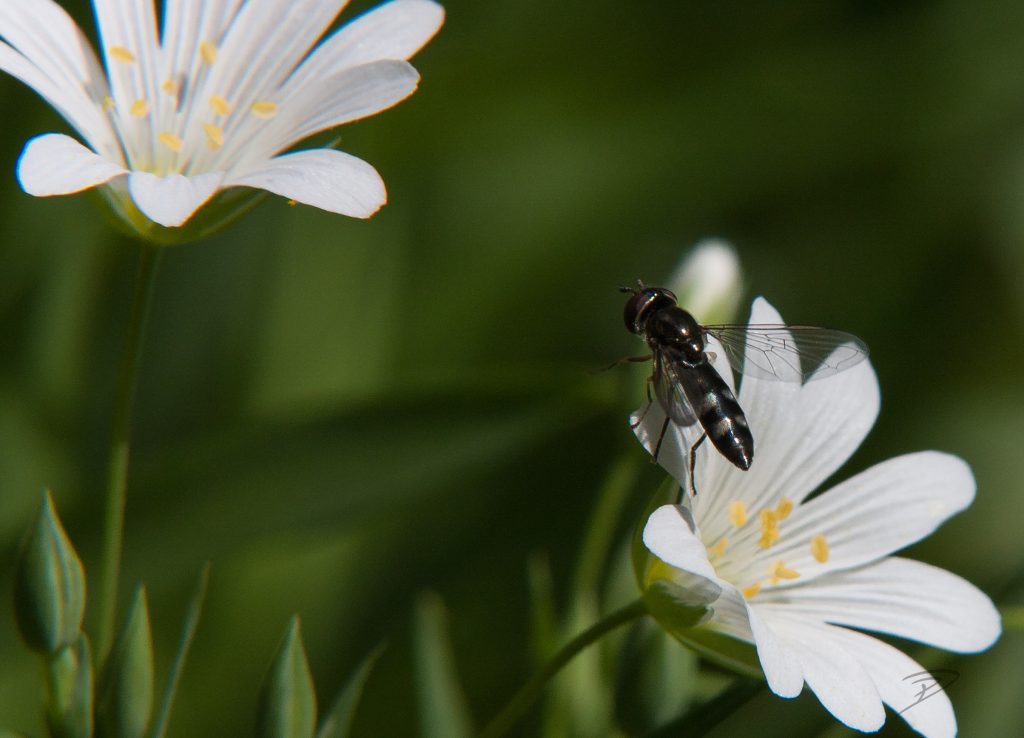
Insect pollination contributes, to varying extents, to improving the yield, quality and resilience of agricultural and horticultural crops – as well as being critical to the reproduction and existence of many of the UK’s wildflowers. The importance of pollinating insects to our economy and countryside is recognised by Government in a National Pollinator Strategy; and pollinators and their associated flower-rich habitats are specifically targeted for conservation in agri-environment schemes.
Bees and hoverflies are two of our key groups of pollinating insects, in terms of effectively and efficiently delivering cross pollination. These two groups are also interesting in their own right, in terms of their colours, forms, diversity, life strategies and interactions with other wildlife.
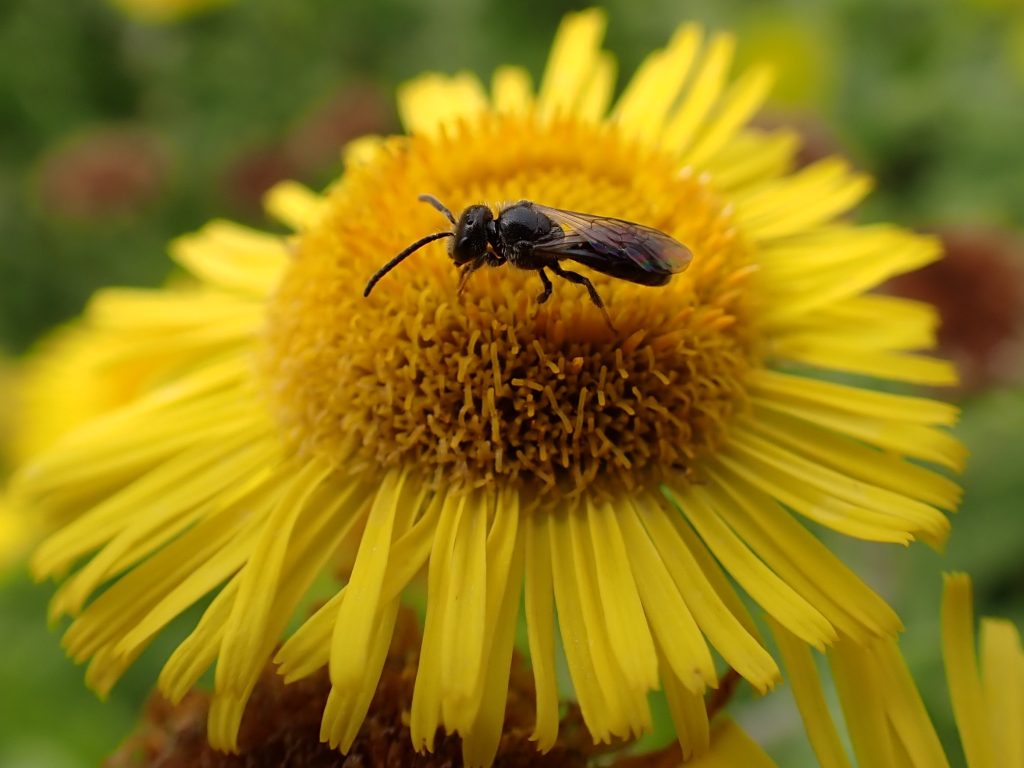
A male furrow bee
A pollinator survey aims to record some of the different species of bee and hoverfly (and butterfly) on your farm. Surveys generally involve walking a route across a farm, incorporating different flower-rich habitats, on three or four occasions from early spring to late summer. A summary report will provide a list of species recorded and some interpretive notes on a selection of bees and hoverflies observed, with reference to the flowers, habitats and other species they are associated with. Recommendations can also be made on refining, improving and/or extending habitat and management to conserve this fascinating and hugely valuable group of wildlife.
Click here to see an example of a pollinator survey report (location and farm name have been removed).
Interested in a pollinator survey on your land?
Surveys can be time consuming, with the associated costs, and may involve the removal of voucher specimens of some bees and hoverflies from the field to ensure correct identification. These types of surveys can typically cost between £1800 and £2700.
To find out more about our FWAG SW pollinator survey services please contact our office on 01823 660684 or email info@fwagsw.org.uk.