
Since meeting at agricultural college in 1986, Rona and Nevil Amiss dreamt of having their own farm. Neither are from farming backgrounds but that hasn’t deterred them. In 1999, after working on other farms for several years, they took on their first tenancy of a small farm on Exmoor, with plans to run a bed and breakfast alongside their livestock farming. But foot and mouth hit, the B&B was temporarily closed and they turned their hand to rearing Christmas poultry. ‘That was stressful and intense,’ reflects Rona. ‘We learnt a lot and when we moved to a county council farm in Devon 6 years later, we did continue with the poultry. But we weren’t getting to spend time with our children at Christmas, it just didn’t work for us.’
In 2013 they moved to their current home at Tregullas on The Lizard, the most southerly farm in mainland Britain. In the last 12 years the Amiss family have turned this 99 ha National Trust farm into a community hub. Its location close to the village centre has given rise to several opportunities that they have grabbed with both hands.
Whilst cattle and sheep remain at the heart of the business, diversification has been the key to allowing all five of their children to get involved in the farm. Their own slow-grown, pasture-fed lamb and beef are popular in the farm’s shop, which boasts a traditional tearoom offering local produce in the busy tourist season. ‘We’re very busy from May to October and all our children have worked in the shop and tearooms at some point.’ Son Percy is currently at Harper Adams completing a mechanical engineering course, Harold is doing a degree in agriculture and daughter Dora is training to be a land agent. ‘They all have skills we can utilise on the farm,’ laughs Rona. ‘It’s a real family business.’
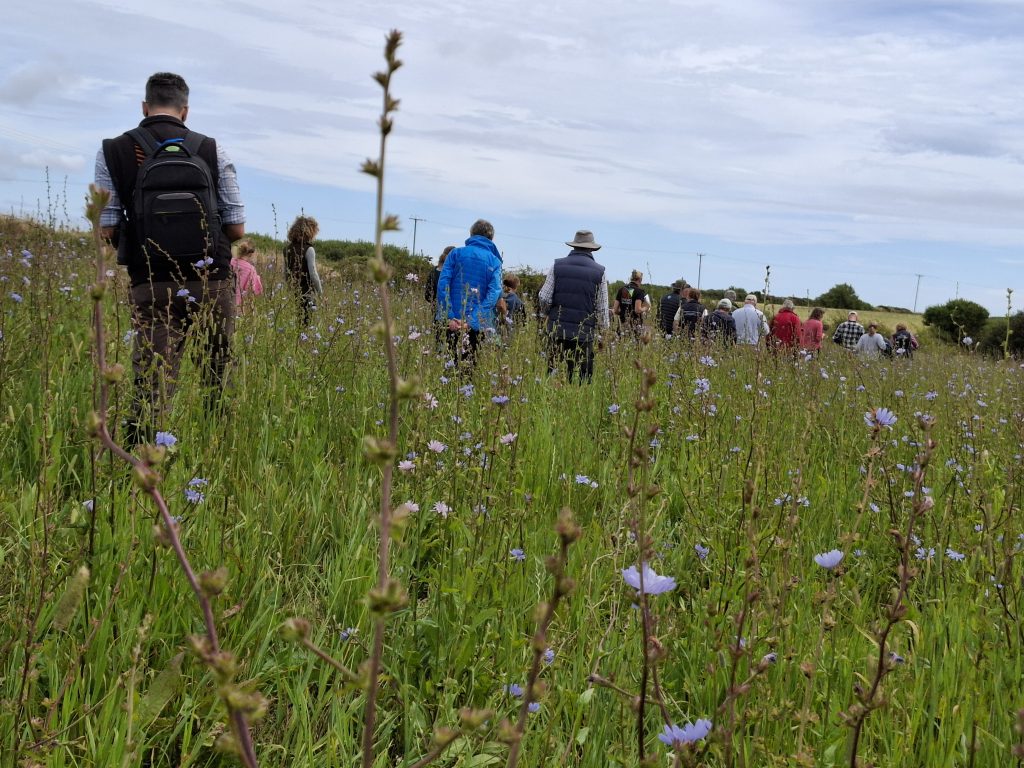
The Cornwall Otter Farm walk at Tregullas Farm in July 2025
Eldest daughter, Elsa, works full-time on the farm, dividing her time between helping Nevil with the livestock, supporting Rona in the shop and delivering educational visits on the farm. In 2025, thanks to a combination of Countryside Stewardship and FiPL funding, they were able to offer 45 school and community groups the chance to visit Tregullas, learning about farming, food production, nature and the landscape. ‘My siblings and I are so lucky we got to grow up on a farm, thanks to Mum and Dad, it’s important that every child gets to experience a bit of that,’ enthuses Elsa. ‘Children today have no idea where food comes from or how important bees are. Their faces when they see the lambs in spring or go on a bug hunt…! It’s so important that farmers can offer this opportunity.’
Her wealth of experience in welcoming people onto the farm led Elsa to take on the role of coordinating the Cornwall Kingfisher Award Scheme, an educational opportunity run by the Farming and Wildlife Advisory Group (FWAG) across the southwest. Kingfisher gives around 300 primary school children in Cornwall the chance to spend half a day on a farm doing a range of hands-on activities. In 2026 the hosts will be Pete and Jenny Old at Cornhill Farm near Cambourne. ‘We rely heavily on the host farm and a team of volunteers to make the Kingfisher field days work but I actually think they get as much out of it as the children do,’ comments Elsa. Rona proudly admits that the young people are drawn to her daughter’s enthusiasm and energy. ‘She’s closer to their age and she inspires them to want to learn and find out about farming as a career option. Not all children thrive in a classroom but when you get them out into the fields and they can run around and explore, their learning comes to life’.
‘It’s not just local school children who benefit from the farm’s community focus,’ admits Rona. ‘The shop and tea rooms are less busy in the winter but we supply newspapers and locals often stop for a cup of tea and a chat – for some people it might be the only conversation they have that day so it’s important.’ In the summer they hire out one of the barns for weddings. ‘It’s a lovely space and brings in some extra income which means we can offer local groups, such as Brownies and Cubs, the barn for free.’ Most recently they’ve hosted film nights, a wreath making workshop, coffee mornings and they even had a panto on the farm!
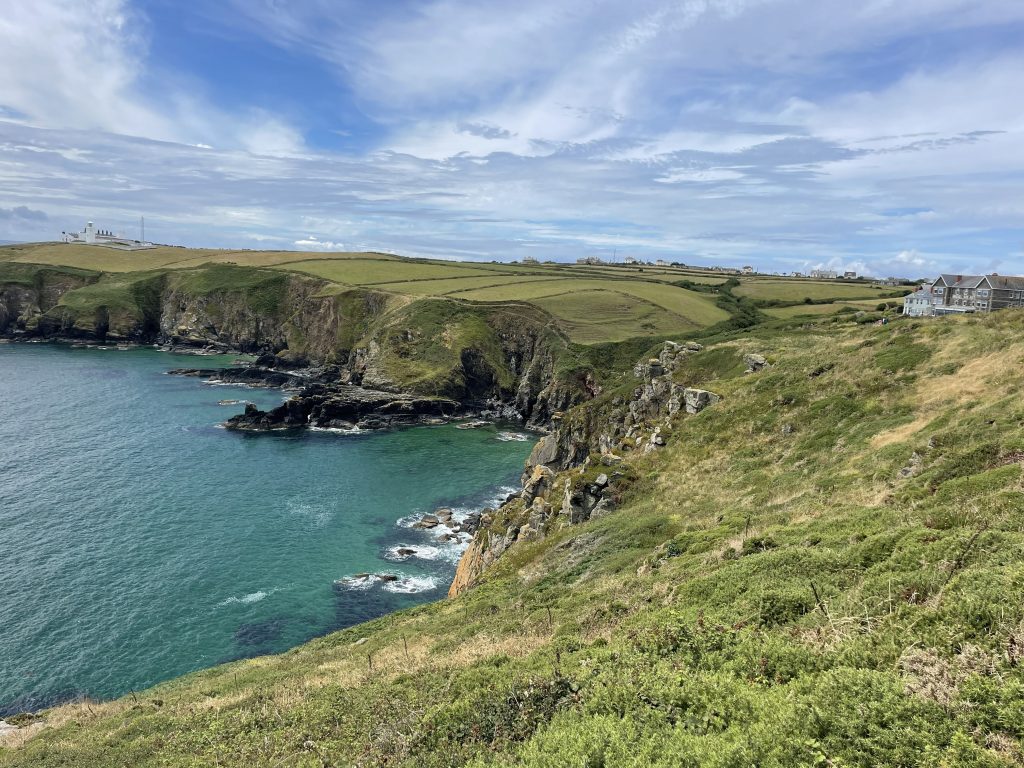
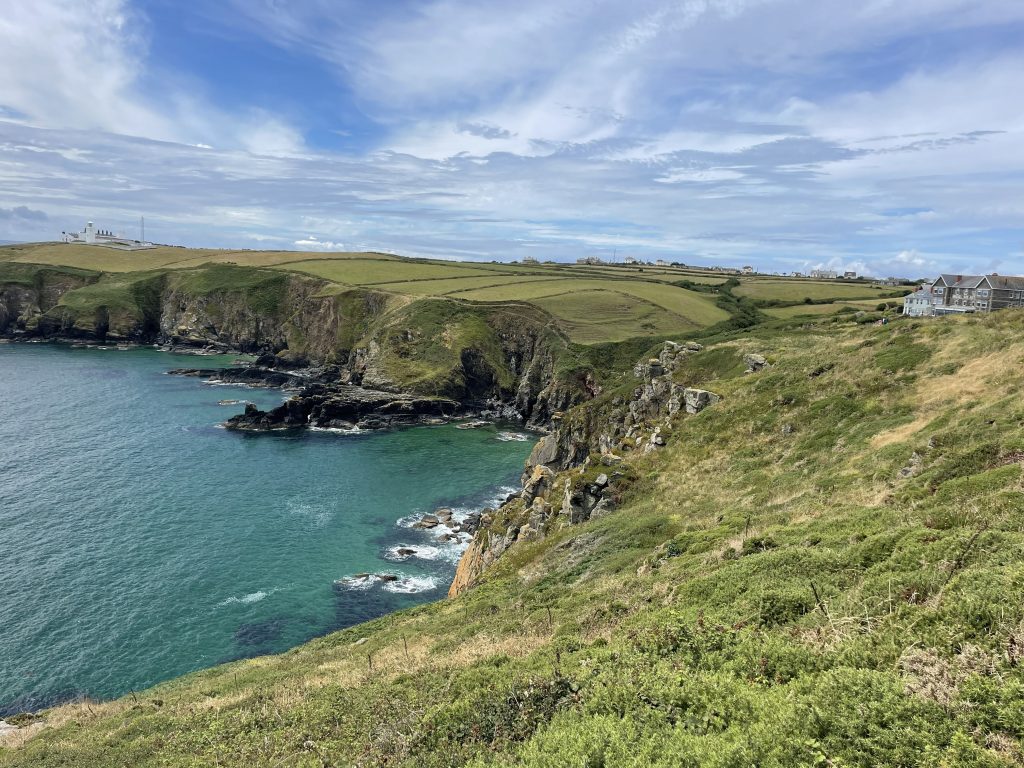
Tregullas Farm is the southern most farm in mainland Britain
‘Running a farm is no longer just about being good with livestock,’ admits Nevil. ‘You need so many skills and to be adaptable.’ Competition for farmland locally is high making expansion difficult, but they have embraced agri-environment schemes, opting for a mix of low input cereals alongside grass, clover and chicory leys. ‘The chicory does well here, the drying sea winds in the summer can be harsh but the chicory persists and gives great flavour to the lamb.’ They have built a flock of around 180 cross-bred ewes, well adapted to the farm’s conditions and the end market. In addition to great quality lamb, the flock’s wool is spun locally and turned into garments sold in the farm shop. ‘Wool is an undervalued product,’ admits Nevil, ‘but our range of hats and gloves sell well in the shop and they have a long shelf life.’
The coastal cliffs are a SSSI and need to be carefully managed. Working with Natural England they have been trialling fenceless grazing collars on their cattle. ‘It works well most of the time,’ says Nevil. ‘It can be tricky to manage in summer when we have so many visitors using the coast path but we’re seeing the benefits for the fauna.’
It was this adaptability and broad thinking that led to the Amiss family winning the FWAG South West Cornwall Otter Award in 2024. James Lyall, one the award judges, reflected on why they were worthy winners. ‘Rona and Nevil have created a real hub for the local community and they carefully reflect on the wider impacts of everything they do at Tregullas.’ This includes protecting water courses to ensure clean water runs into the sea, providing overwinter feed for birds and helping to protect Cornish coughs, a target species.
‘We’re proud of winning the Cornwall Otter Award, it’s lovely to be acknowledged for what we’re trying to achieve,’ said Nevil, who was presented the award at the Royal Cornwall Show alongside Rona and Elsa.

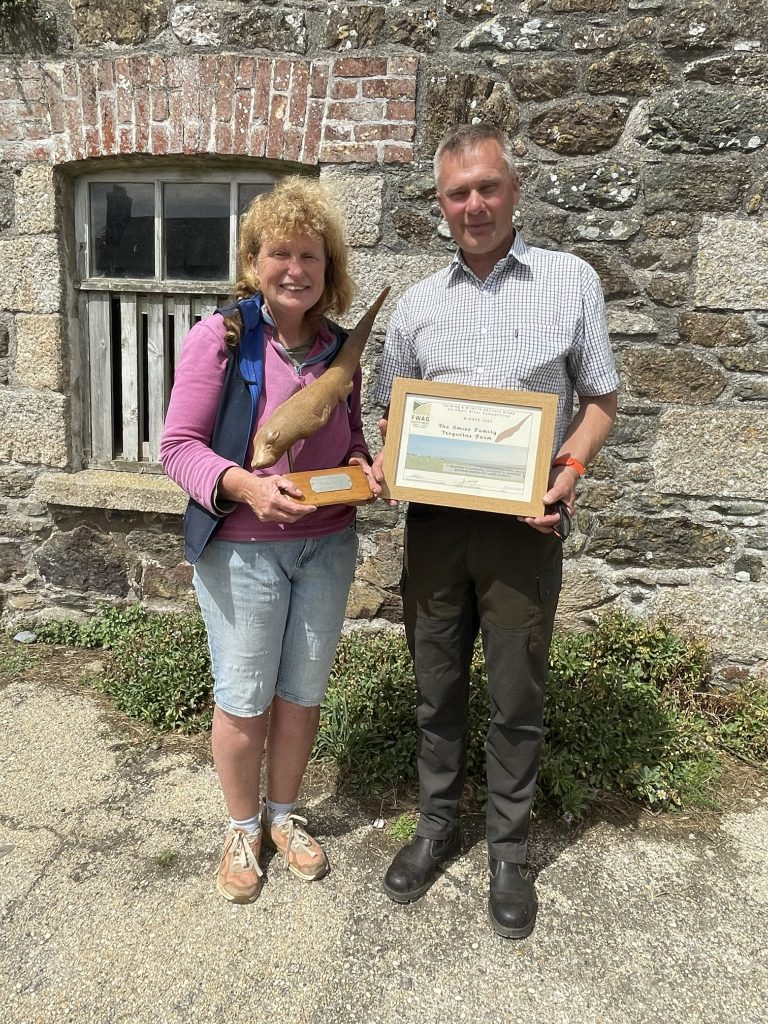
 Rona and Nevil with the Cornwall Otter Trophy
This winter, Nevil and son Alfred will be busy putting up new fencing across parts of the farm. Funding for capital works has allowed their eldest son to be employed part-time on the farm whilst carrying out other contracting work locally. The short-term nature of farm support schemes makes it difficult for them to offer full-time employment to Alfred on the farm but for now they make it work and he’s gaining valuable experience.
Agri-environment schemes to date have allowed them to focus on improving soil health and reducing reliance on inputs. ‘We’re a low cost, low input system. We finish our lambs all year round so that we have a consistent supply for the shop and the local farmers markets we attend,’ adds Nevil. Their 40-strong herd of Hereford cows produce beef for the shop as well as selling some offspring as stirks or strong stores, depending on the market.
‘We’re considering agroforestry as an option on the farm; we’ve already added a lot of trees and hedges since we first came here but we’re looking now at incorporating willow as browsing for the cattle when it gets dry.’
Having purchased 9 acres of land themselves, their next project is growing flowers and foliage to supply the farm shop. ‘We’re mindful that we’re tenants at Tregullas and who knows what the future holds,’ says Rona. ‘This little bit of land we own could bring in another income stream and provide us with a bit of security. We’ve been fortunate to secure some Farming in Protected Landscapes (FiPL) funding through Cornwall National Landscape. We’re working with Forest for Cornwall and have planted some trees that can be used for cut-foliage.’ Next steps are to put up a polytunnel for propagating and work will start shortly on a wildlife irrigation pond – another great feature for school visits too.
Looking to the future with plenty of positivity they are open to new opportunities. ‘We’ve thought about running a pop-up restaurant in the evenings – we love doing community events and we’d like to think we can secure more funding to continue with the educational visits,’ adds Rona. ‘We’re never short of ideas or enthusiasm,’ which is something they have certainly passed on to the next generation!
Kate Harris
(This article was published in Farmers Guardian in January 2026)