
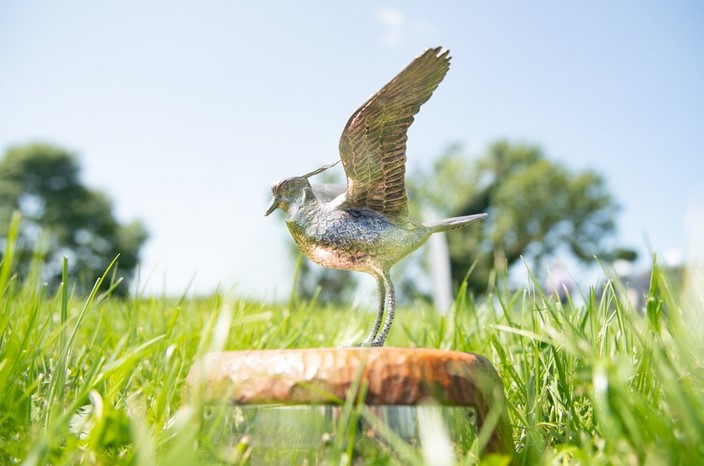
To win this prestigious and longstanding award, a farm has to demonstrate a real commitment to species and habitat conservation and be able to show how they integrate their environmental management in their overall farm business. Understanding and conserving historic aspects of the farm is also important. In addition, consideration is given to the farm’s approach to conserving natural resources; this includes good soil management, the protection of water quality and efficient use of water and energy. These are all areas that the judges consider on their tour of the competition finalists.
About the Silver Lapwing Competition Judges
Martin Hole grew up on the (mainly rented) family farms on the Southdowns around Lewes, East Sussex, before doing his degree in Rural Environmental Studies at Wye College, graduating in 1985. After a spell back in Sussex milking cows and helping with the arable enterprises, he went to work at Elmley, on the Isle of Sheppey by the Swale Estuary, where some three and a half thousand acres of grazing marshes were being entered into a National Nature Reserve agreement, where he was the first head of conservation. After 6 years managing what is now the highest concentration of nesting waders in the UK he married Gundrada and returned to East Sussex to run a small family farm on the Pevensey Levels, taking this from just over 200 acres to some 700, and running this too as a wetland nature reserve, supported by Natural England, organic beef and sheep and some diversification. This farm was voted UK Lapwing Champion back in 2004. Martin is currently county chair of East Sussex NFU, Founder and Chair of the Pevensey Farmers cluster and a founder member of the Nature Friendly Farming Network. Passionate about wildlife, Martin, father of three daughters, is also a keen canoeist, former fast bowler and regular fives player.
Chris Butler has a 1500 acre family arable farm, near Halstead, North Essex. Chris is keen on regenerative farming, minimum cultivation (less than 50mm) for over 8 years and third of the farm is direct drilled. Part of a stewardship schemes for 30 years, currently in mid-tier which includes AB8, AB9, AB15, AB12, SW1, SW3, SW4, hedge coppicing and hedge management. Started diversifying in 2007 with the conversion of a thatch 17th century barn into Café/Restaurant, Post Office, and Farm Shop. The farm yard now also includes a pre school nursery, forestry school, hair dresser, dog groomer, animal feed retail outlet, beautician, ceramic and pottery studio and small events barn. The majority of which are heated by a 200kw biomass burner supplied by the farm’s hedges and woodland. Chris has been involved with FWAG since the early 80s, has been Essex Chairman, and a natural trustee and is currently National Chairman of the FWAG Association. The farm was the Essex LEAF demonstration farm from 1997 to 2012. Chris is married to Tania and has three children, 2 daughters and a son and 2 grandchildren. His son David, is now back on the farm and pushing to get Dad into an old people’s home! Chris is a keen tennis player and game shot.